Muscle Density as Corporate ROI: Why Skeletal Muscle is the New KPI for Talent Management
Discover why skeletal muscle mass—not just BMI—is the critical metric for reducing corporate medical expenditure and improving metabolic health in the Asian workforce.
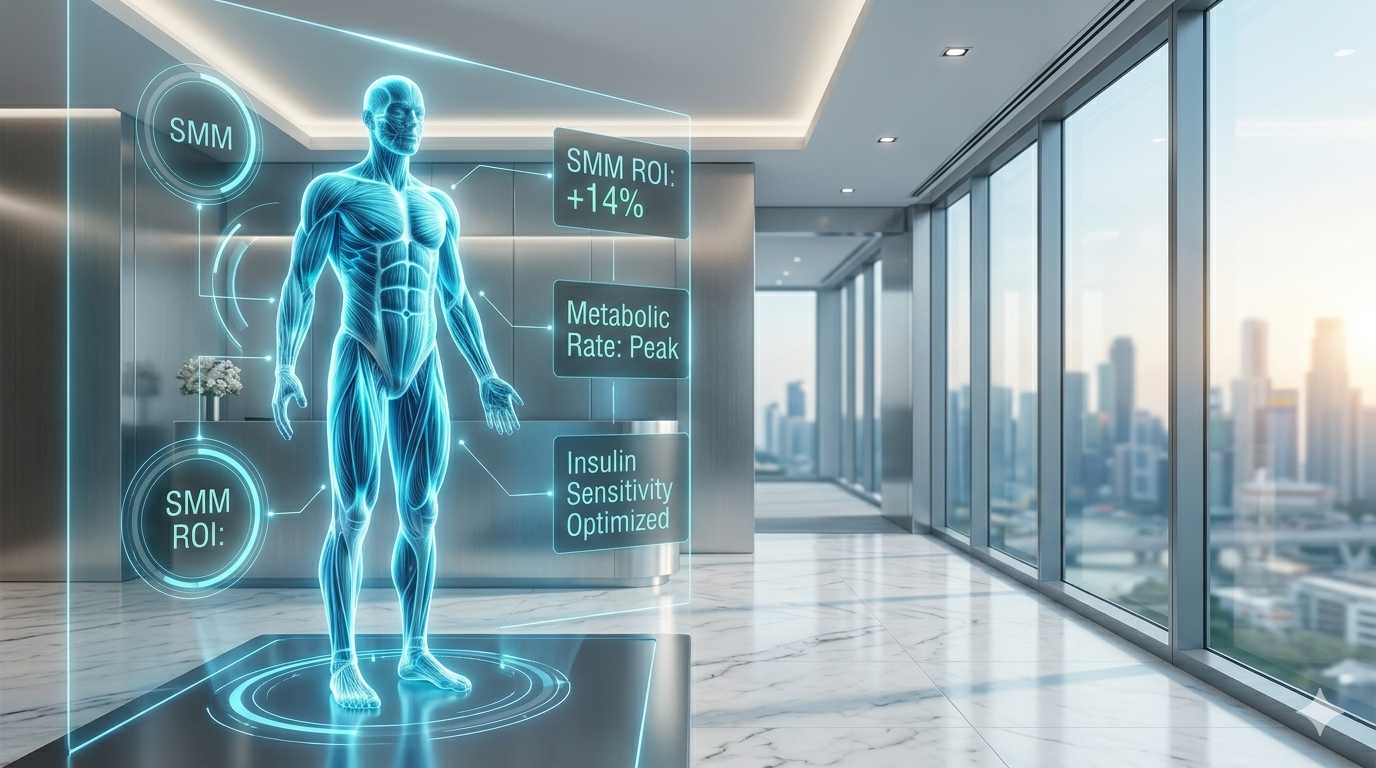
The true cost of corporate talent “depreciation” is often hidden not in HR turnover rates, but in the declining skeletal muscle mass of the workforce. According to the Singapore 2024 National Population Health Survey, the transition into the workforce marks the most significant spike in obesity rates due to increased sedentary behavior. For forward-thinking employers, understanding the “Metabolic Engine” of their employees is no longer optional—it is a fiscal necessity.
| Key Dimension | Clinical Standards & Data Context | Business Impact |
|---|---|---|
| Skeletal Muscle Mass (SMM) | Bi-monthly Body Composition tracking. | Reduces all-cause mortality risk by 20%-30%. |
| Metabolic Health | Monitoring ApoB and Insulin Sensitivity (HOMA-IR). | Lower long-term medical claims for T2DM and Hypertension. |
| Functional Capacity | >150 min aerobic + 2 days muscle-strengthening. | 60% reduction in reported workplace physical pain. |
1. How Muscle Acts as a “Metabolic Engine” to Reduce Expenditure
Skeletal muscle is the most metabolically active tissue in the body, serving as the primary site for glucose disposal and insulin action. Engaging in regular muscle-strengthening activities (currently only 35.7% of Singaporeans do) actively lowers the company’s risk of chronic disease-related productivity loss.
2. Quantifying the ROI of Workplace Health Ecosystems (HWE)
Utilizing a localized ROI Calculator, companies can predict the financial return of health interventions over a three-year cycle based on metabolic recovery. In mature worker programs, roughly 22% of participants with abnormal BMI successfully improved their body composition metrics through structured workplace ecosystems like HWE.
3. The Medicine 3.0 Pivot: Beyond the 27.5 BMI Threshold
For Asian populations, a BMI of 27.5 marks the high-risk zone for metabolic failure, making muscle quality even more vital than total weight. Monitoring “vascular rust” (atherosclerosis) through ApoB markers and muscle quality (avoiding myosteatosis) ensures that the talent “battery” remains fully charged for high-performance output.
FAQ Section
Q1: Why should my company pay for body composition tests instead of basic health screenings? Answer: Standard screenings catch disease after it manifests; body composition predicts it before the first claim is filed. By identifying low muscle density early, you are preventing the “talent battery” from draining and reducing the 20%-30% risk of cardiovascular-related absenteeism.
Dual-City Strategic Medical Liaison
Implement data-driven wellness at our key regional hubs:
- Kuala Lumpur: The Exchange TRX, Level 33.
- Singapore: Novena Medical Center, Suite #11-08.